Over time, the fat at the bottom of your feet can be lost or change its position. When this happens, walking and standing can become extremely painful, with a feeling like you’re stepping on pebbles or directly on the bone. Calluses and hardened tissue can appear, further exacerbating the problem. This is known as fat pad atrophy, and if you suffer from this condition, you will know that it can be debilitating at times.
For effective relief, you can have a podiatrist perform restorative treatment for foot pad cushioning if you reside in Boynton Beach. The results are long-term and provide a night and day difference.
Learn more about fat pad atrophy, how it occurs, and what the Foot, Ankle & Leg Vein Center can do to help.
Call and schedule an appointment with Foot, Ankle & Leg Vein Center, top podiatrists in Boca Raton, FL, or Boynton Beach, FL, at (561)-750-3033.
Understanding Fat Pad Atrophy
The loss of foot pad cushioning can affect anyone, although the problem usually occurs with age or in people who perform frequent high-impact exercises like running and jogging. Genetics also plays a role in the development of this condition. Fat pads provide cushioning under a healthy foot, protecting the bones during movement. As the fat is broken down or moved, the pain will start to occur.
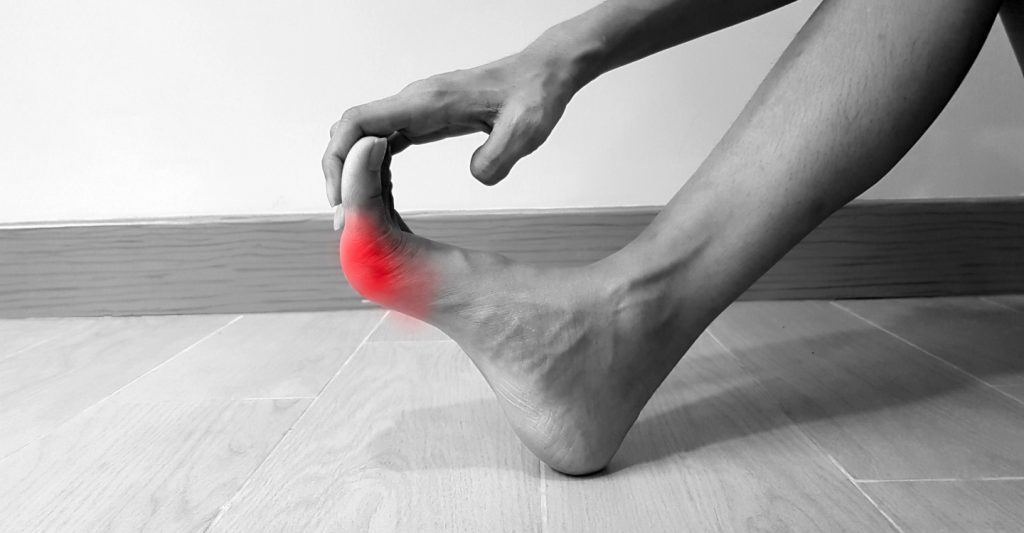
Cushioning is lost either at the ball of the foot (just behind the toes) or in the heel. Some people develop fat pad atrophy in both regions.
When you walk, the pressure on the heel is equivalent to around 2.5 times your body weight. This can lead to severe pain that reduces your ability to exercise or even perform simple daily tasks. This could impact your personal life, work, and even your mental health.
Dealing with ongoing pain that affects mobility is not easy. With the help of a podiatrist in Boynton Beach, you could restore foot pad cushioning and enjoy a fuller and more active lifestyle.
![]() | ![]() |
Symptoms That Suggest You Need Treatment for Foot Pad Cushioning
Pain is one of the most obvious symptoms of fat pad atrophy, but it’s not the only one. Learn the symptoms and warning signs and talk to your podiatrist if you think you are suffering from this condition.
Symptoms and telltale signs of fat pad atrophy include:
- Pain under the heel or ball of the foot when walking on a hard surface without shoes.
- A burning sensation in the heel or ball of the foot that becomes more severe with activity.
- Dull aching in the heel.
- Being able to feel your heel bone or bones under the ball of your feet through a thin layer of fat.
- Pain increases the more active you are.
- A knocking sound, rather than a soft patter, when you walk on a hard surface.
Note that some pain symptoms may be related to plantar fasciitis, another condition that requires the attention of a Boynton Beach podiatrist. If you feel foot pain in the morning that diminishes with activity, then it’s likely that fat pad atrophy is not the cause.
All types of foot pain can be examined by the specialists at the Foot, Ankle & Leg Vein Center.
Complications of Fat Pad Atrophy
Restoring footpad cushioning can improve comfort and mobility. Even more importantly, treatment can prevent the risk of complications.
The natural fat in your feet provides cushioning which makes it more comfortable to walk. It also protects bones from damage by lessening the impact of hard surfaces. Stress fractures are a possibility if you don’t receive treatment from a podiatrist. Don’t delay if you’ve experienced any of the symptoms listed above.
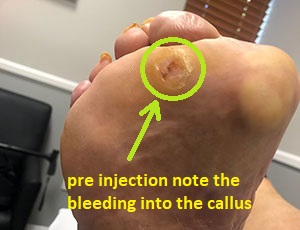
Calluses can also form over the areas of the feet where the fat pads are degraded. These can become painful over time. Calluses can be removed when you seek restoration for foot pad cushioning in Boynton Beach.
How We Correct Problems with Foot Pad Cushioning in Boynton Beach
There are three potential treatments offered by experienced podiatrists at the Foot, Ankle & Leg Vein Center.
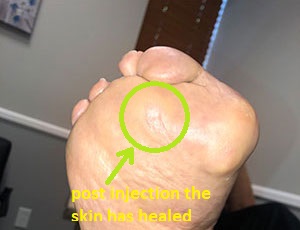
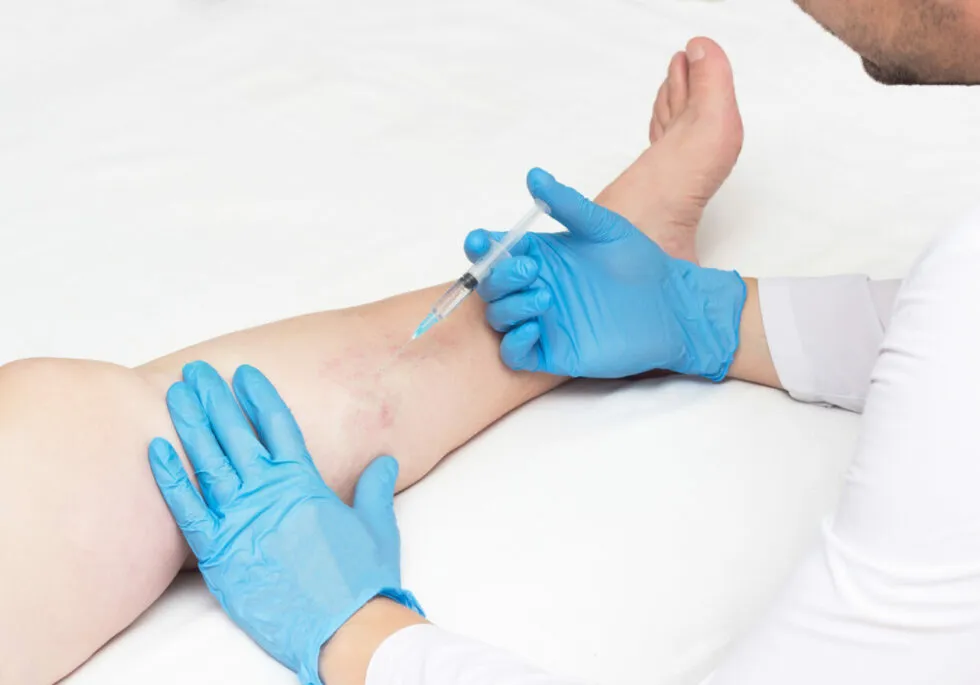
- Injectable fillers can be used to replace lost fat, giving you a comfortable gait no matter your age. This treatment is popular for cases that aren’t highly advanced. It is quick, relatively painless, and you can walk out of the practice with cushioned feet for the first time in years. Fillers are most suitable for high-pressure areas.
- Fat Pad Surgery is another option that can be used if fat pad atrophy is treated in conjunction with other conditions. This procedure will use a graft that is layered in the ball or heel of the foot to provide additional padding. For details on fat pad surgery, book a consultation with Dr. Jodi Schoenhaus.
- Fat Pad Transfer, or autolipotransplantation, will take available fat from the stomach or buttocks or legs to be transferred to the site of fat pad atrophy in the foot. This procedure has a few weeks of recovery time but the results can last for years.
The right treatment for you will depend on your condition and unique circumstances. Contact us today to schedule a consultation and explore your options for the restoration of foot pad cushioning in Boynton Beach.
Podiatrists at the Foot, Ankle & Leg Vein Center can provide relief for painful fat pad atrophy. Restore fat pads and enjoy a more comfortable lifestyle that is free of foot pain.

Fat Pad Atrophy Treatment for Heel and Ball of Foot Pain
Fat pads in your feet provide essential shock absorption and cushioning during walking and standing. Over time, the natural fat pad on the bottom of the foot can become thin due to wear and tear, loss of fat tissue, or atrophy. This can cause foot pain, especially pain under the heel or in the ball of the foot, often described as walking barefoot on bone.
Known as fat pad atrophy or fat pad syndrome, this condition can limit mobility and worsen without proper care. Read on to learn how fat pad atrophy develops, the symptoms to watch for, and the treatment options available.
Understanding Fat Pad Atrophy
Fat pad atrophy occurs when fat pads in your feet lose volume, elasticity, or structure. These fat pads contain fat globules, fat cells, and soft tissue that protect the bottom of the foot from repeated impact. When the plantar fat pad or heel pads become thin, shock absorption decreases, and pressure is transferred directly to bones and joints.
Plantar fat pad atrophy commonly affects the heel or ball of the foot. In some cases, fat pad loss occurs in both areas. Atrophy is a common condition associated with aging, high-impact exercises, walking barefoot on hard floors, and certain foot conditions.
Common contributors include:
-
Loss of fat due to aging or atrophy as well as natural degeneration
-
High-impact exercises that compress the fat pads repeatedly
-
Rheumatoid arthritis and other inflammatory conditions
-
Diabetic foot changes that affect fat pad tissue
-
Structural foot conditions such as metatarsalgia or neuroma
-
Repeated walking barefoot on hard surfaces
-
Foot or heel trauma or prior injections
As heel pad thickness decreases, pain in your heel or pain under the heel becomes more noticeable during standing and walking.
Symptoms That Suggest You Need Treatment for Foot Pad Cushioning
Pain is the most common sign of plantar fat pad atrophy or heel fat pad atrophy, but several symptoms may appear as the condition progresses.
Symptoms include:
-
Pain in the Ball of the Foot When Walking: Ball of foot pain occurs during walking as thinning fat padding fails to absorb pressure with every step properly now.
-
Pain Under the Heel on Hard Surfaces: Heel pain worsens on hard surfaces because reduced cushioning increases direct impact forces beneath the calcaneus bone during walking activities.
-
Burning or Aching Plantar Heel Pain: Burning plantar heel pain develops as inflamed tissues and inadequate fat padding fail to protect sensitive nerve endings during movement.
-
Heel Pain That Worsens With Activity: Heel pain intensifies with activity because repetitive loading overwhelms diminished shock absorption and fatigues surrounding soft tissues over time progressively.
-
Feeling Heel Bone or Metatarsals Through Thin Tissue: Patients feel heel bone or metatarsals as protective fat thins allowing pressure directly against underlying skeletal structures during standing walking.
-
Increased Pain When Barefoot: Pain increases barefoot because shoes normally provide cushioning support missing when standing or walking directly on hard surfaces without protection.
-
Neuroma Foot Pain or Metatarsalgia Symptoms: Loss of cushioning aggravates neuroma foot pain and metatarsalgia by increasing forefoot pressure and nerve compression during gait cycles daily.
-
Morton’s Neuroma Foot Pain: Reduced fat padding worsens Mortons neuroma foot pain by amplifying nerve irritation between compressed metatarsal heads with walking activities regularly.
-
Reduced Heel Pad Elasticity and Shock Absorption ;Reduced heel pad elasticity limits shock absorption causing greater impact forces transmitted through the foot with movement during daily activity.
-
Pain Relief Only With Cushioned Supports: Temporary pain relief with cushioned socks heel cups or inserts indicates dependence on external padding for comfort during standing walking.
If pain is worse in the morning and improves with movement, plantar fasciitis may be present instead of fat pad atrophy. A podiatry evaluation can distinguish between plantar fasciitis, neuroma, and fat pad syndrome.
Complications of Fat Pad Atrophy
Early treatment of fat pad atrophy is important to prevent complications. Without adequate cushion, the bottom of your foot is exposed to excessive pressure.
Potential complications include:
-
Stress fractures of the heel or forefoot
-
Chronic foot pain and ankle strain
-
Foot ulcers, particularly in diabetic foot patients
-
Callus formation over areas of fat pad loss
-
Increased risk of soft tissue damage
-
Reduced mobility and balance issues
Treatments for fat pad atrophy aim to protect the foot and ankle while restoring natural fat pad function.
How We Correct Problems with Foot Pad Cushioning
The treatment of fat pad atrophy depends on the severity of fat pad loss, foot conditions present, and patient lifestyle. At Foot, Ankle & Leg Vein Center, podiatrists offer several treatment modalities.
Conservative Treatment Options
Mild cases may benefit from:
-
Custom orthotics to reduce pressure on the area of your foot
-
Shoe gear modifications and cushioned footwear
-
Heel cups, heel pads, and shoe inserts
-
Cushioned socks to reduce friction
-
Rehabilitation exercises to support foot mechanics
These options help reduce stress on the feet but do not build up your fat pads.
Injectable Fillers and Fat Pad Augmentation
Dermal fillers and injection-based fat pad augmentation are commonly used for temporary relief of pain.
Benefits include:
-
Injection treatments provide immediate cushioning
-
Injections for the temporary relief of foot pain
-
Improved comfort when walking barefoot or standing
-
Reduced pain in the ball and heel
Fillers work by increasing pad tissue volume but may require repeat treatments for continued pain relief.
Fat Pad Transfer and Fat Grafting
Fat grafting, also known as autologous fat grafting for pedal applications, uses an amount of your own fat harvested from another area of the body.
This approach involves:
-
Transferring natural fat tissue to the bottom of the foot
-
Using autologous fat to restore cushioning
-
Improving heel pad thickness and elasticity
-
Long-term fat pad restoration for severe cases
Fat grafting helps treat fat pad atrophy by restoring natural fat pad structure and shock absorption.
Surgical Treatment Options
In advanced cases, surgical treatment of fat pad atrophy may be recommended, particularly when combined with other foot conditions such as neuroma, metatarsalgia, or structural deformities.
Surgical options aim to stabilize fat pad tissue and protect the plantar fat pad.
Choosing the Right Treatment for Fat Pad Atrophy
The best treatment of fat pad atrophy depends on:
-
Severity of fat pad thinning
-
Location of pain in the heel or ball of the foot
-
Presence of neuroma or plantar fasciitis
-
Activity level and footwear habits
-
Foot or heel biomechanics
A podiatry evaluation ensures accurate diagnosis and appropriate treatment selection.
Schedule a Consultation
If you are experiencing foot pain, pain in your heel, or pain in the ball caused by fat pad loss, professional care is essential. Fat pad atrophy occurs gradually and rarely improves without treatment.
Foot, Ankle & Leg Vein Center provides comprehensive treatment of fat pad atrophy using evidence-based techniques designed to restore cushion, reduce pain, and improve mobility. Early treatment can prevent further atrophy and help you return to walking comfortably.