


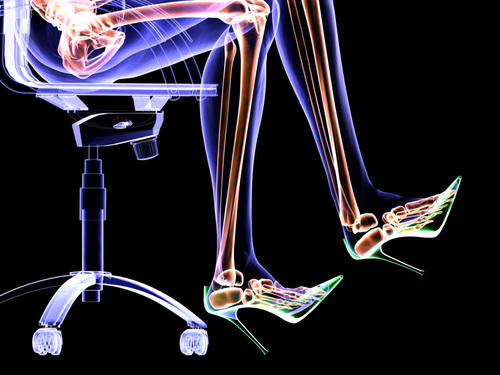
Do you have heel pain with the first step of the day?
Whether the pain is on the bottom of the heel or in the back of the foot at the Achilles tendon, it is important to understand the nature of the deformity in order to appropriately treat the symptoms. Heel pain syndrome, usually known as plantar fascistic or heel spur syndrome, is a chronic condition caused by an altered walking pattern.
Heel pain is usually present with the first step of the morning or when rising out of a chair after sitting for a long time. It can also be present after walking for long periods of time and at the end of the day. Usually a bio-mechanical alteration of normal gait, heel pain can be effectively controlled without surgery in most cases.
Orthotic management and control is the most important treatment for reducing heel pain and controlling the mechanics of the altered walking pattern. Other treatments for heel pain include ice, anti-inflammatory medication, steroid injection therapy, stretching, night splinting, physical therapy, and orthotics.
Our doctors offer the newest and extremely effective technology for heel pain syndrome called extracorporeal shock wave therapy (ESWT) otherwise known as orthotripsy. The modality delivers focused shock waves to the body, inducing microtrauma to the area that the body recognizes.
This non-invasive procedure only requires three treatments performed weekly to achieve an 80% reduction in symptoms.
This process divides the different types of blood cells. The product that is reinjected into the injured site is rich in growth factors that stimulate a healing cascade in the body. It signals to the body to initiate healing that has slowed or ceased causing long-term pain in a given area such as the plantar fascia. The benefits are that it is an individual’s own cells that are used. This does not use any energy, grafting, or outside modality making this truly a “green” medical treatment.
In most cases, the procedure is done in an office visit and only one session is required. Although this is not covered by insurance, it is certainly the most advanced and cutting-edge treatment that has kept many patients out of surgery.
Heel pain is one of the most common foot and ankle problems, and plantar fasciitis is the most common cause of heel pain. This foot condition affects the plantar fascia, a thick band of tissue that runs along the bottom of your foot, connecting the heel bone to the toes. When this band of tissue becomes irritated, it leads to pain and inflammation, often causing plantar fasciitis pain that interferes with walking or standing.
At Foot, Ankle & Leg Vein Center, our specialists focus on accurate diagnosis and treatment to reduce chronic heel pain, restore foot health, and help patients return to daily activity with confidence.
Plantar fasciitis is inflammation of the plantar fascia, which is a strong band of tissue that connects your heel to your toes. This tissue supports the arch of the foot, helps stabilize foot mechanics, and absorbs shock during walking or standing.
When excessive strain is placed on this tissue, it can develop small tears. Over time, the plantar fascia becomes irritated, leading to pain in your heel, especially during weight-bearing activities.
Plantar fasciitis commonly causes pain:
At the bottom of the foot
Near the heel on the ground
Along the sole of the foot
Through the arch of your foot
Pain associated with plantar fasciitis typically develops where the plantar fascia pulls on the heel, especially at its attachment to the heel bone. This area experiences repeated stress during walking or standing, particularly during long periods of activity.
Pain is usually worst:
During the first steps in the morning
When you stand up after sitting
After prolonged standing
When walking barefoot or wearing flat shoes
Many patients describe stabbing pain, pain in the morning, or discomfort that eases as the foot warms up but returns later in the day.
Symptoms of plantar fasciitis often begin with heel pain during the first steps of the day. Identifying the underlying causes allows foot and ankle specialists to create targeted treatment plans.
Several factors increase your risk of developing plantar fasciitis and related foot pain:
Flat feet or a high arch
Poor shape of your foot
Tight calf or Achilles tendon
Long periods of standing
Running on hard surfaces
Wearing unsupportive or flat shoes
Occupations requiring prolonged walking
These factors alter foot mechanics, increasing pressure along the bottom of the foot.
Because many foot and ankle problems can cause heel pain, proper diagnosis is essential. Conditions such as heel spur, nerve entrapment, Achilles tendon issues, or stress fractures may cause similar symptoms.
Diagnosis includes:
Medical history review
Physical examination
Evaluation of foot structure
Palpation of the plantar fascia
Assessment of calf flexibility
Imaging when necessary
Most patients can treat plantar fasciitis without surgery using conservative care designed to reduce pain and inflammation and take pressure off your plantar fascia.
Orthotics or shoe inserts
Custom orthotics
Supportive footwear
Stretching the calf muscle and plantar fascia
Night splints
Physical therapy
Icing your foot
Anti-inflammatory medications
These treatments for plantar fasciitis focus on restoring normal foot mechanics and providing pain relief.
When conservative care fails, advanced therapies may be recommended for chronic heel and plantar fasciitis pain.
Shockwave therapy delivers acoustic waves to the affected tissue to stimulate healing and improve blood flow. It is commonly used for plantar fasciitis for at least several months that has not improved with standard care.
Benefits include:
Non-invasive treatment
No downtime
Improved healing response
Effective for chronic heel pain
This approach uses biologic components to restart healing in tissue where recovery has slowed, helping reduce pain and inflammation without surgery.
Surgery is rarely required. When needed, plantar fascial release may be considered for severe cases that do not respond to other ways to treat plantar fasciitis.
Surgery works by:
Releasing tension in the plantar fascia
Reducing pressure on the heel
Improving mobility and comfort
Long-term care for plantar fasciitis focuses on prevention and maintaining foot health.
Prevention strategies include:
Wearing supportive footwear
Using orthotics or shoe inserts
Stretching the calf and Achilles tendon
Avoiding walking barefoot
Gradually increasing activity if you’re running
Maintaining healthy foot mechanics
Foot, Ankle & Leg Vein Center provides comprehensive care for common foot and ankle conditions, including plantar fasciitis and heel pain. Our specialists focus on accurate diagnosis, evidence-based treatment, and long-term prevention. Patients receive personalized care designed to relieve pain, improve mobility, and support overall foot health.
With convenient locations serving Boca Raton and Boynton Beach, we help patients address heel pain early to reduce the risk of chronic symptoms and long-term complications.