Gold Standard Bunion Treatment in Boca Raton, FL, and Boynton Beach, FL.
Foot, Ankle & Leg Vein Center offers patients options like minimally invasive surgery to help correct any pain or discomfort caused by bunions.
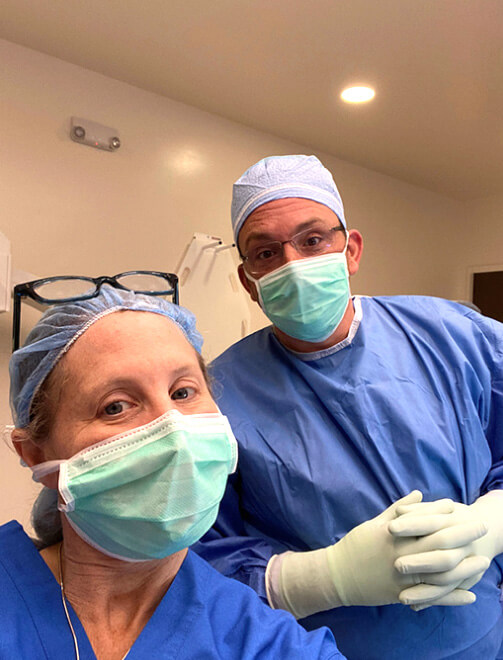










Have your bunion treated.
Got Bunions! We'll straighten you out.
- Minimal to no pain.
- Return to normal activities faster.

Your Bunion Specialist
Why choose the Foot, Ankle & Leg Vein Center with Dr. Jason Gold as your bunion expert
Dr. Gold has been practicing since 2004 and has performed thousands of procedures. The Foot, Ankle & Leg Vein Center offers services tailored to each individual’s needs:
- More than 2,000 bunion procedures performed.
- Dr. Gold has lectured at the Annual Florida Podiatry Conference on “How to avoid complications in bunion surgery.”
- Dr. Schoenhaus has lectured on Lapiplasty.
- We’re highly rated on Google.
- You’ll get quick recovery time.
- You’ll be walking immediately.
- Our procedures are minimal to no pain.

Award Winning Bunion Specialists
Bunion Treatment by Top Rated, Award Winning and Board Certified Podiatrists.
Our podiatric foot and ankle specialists present a range of advanced treatments to address bunions in Boca Raton, FL, and Boynton Beach, FL.
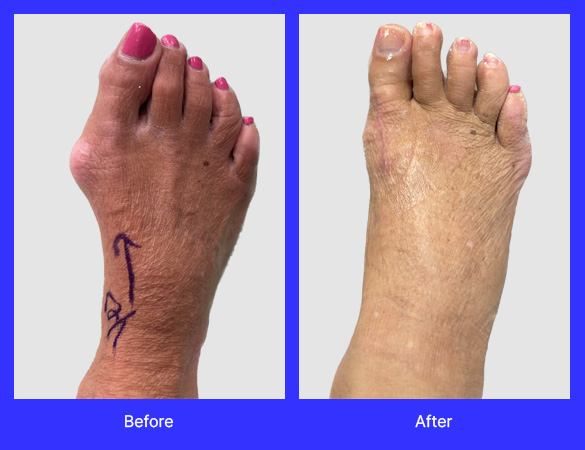
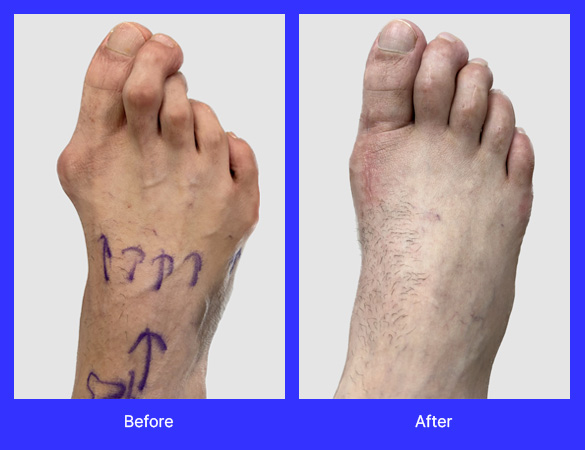
In cases where non-surgical options fail to alleviate your discomfort, our top-rated bunion surgeons utilize the latest minimally invasive bunion surgery techniques, also known as no scar bunion surgery, to correct foot deformity (hallux valgus) with minimal scarring and recovery time. Each bunion removal procedure is meticulously planned to achieve optimal cosmetic results.
Check out these incredible numbers.
The Foot, Ankle & Leg Vein Center specializes in new techniques that allow patients to return to activity faster than ever.
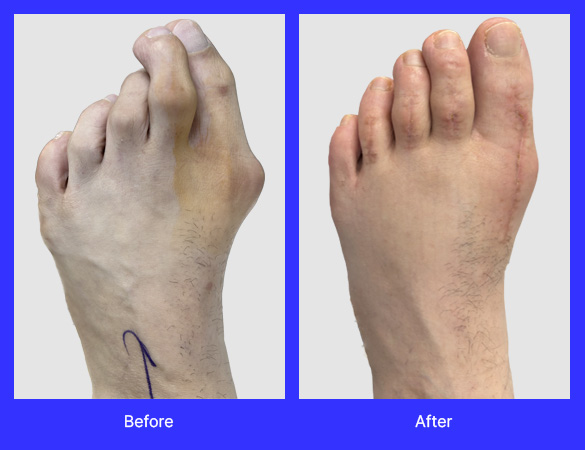
Bunion Surgery Reviews
Don't just take our word for it.
See what our patients have to say.
Our patients love treating their foot, ankle and leg vein conditions with us.
Top-Rated Bunion Surgeons
Award Winning Bunion Surgeons in
Boca Raton, FL, and Boynton Beach, FL.
Though some bunions do not produce severe symptoms and may be treated with conservative means like orthotics and roomy shoes, surgical intervention is the only way to truly correct the bony deformity of a bunion.
At your visit, x-rays will be taken to determine the extent of the deformity and the exact procedure that would be required to correct it.
Most procedures are done at an outpatient surgical center, and most patients can walk immediately after the operation. Scar reduction techniques are employed during bunion correction surgery as well.
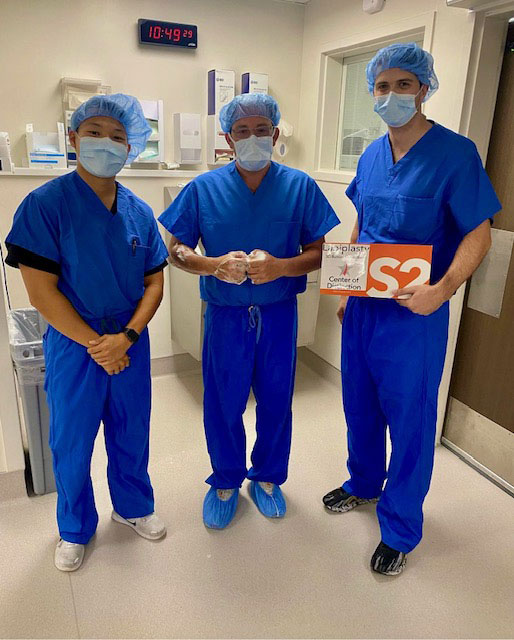
Bunion Removal Specialists
Bunion Surgery Patient Testimonial
Bunion Surgery correction includes realigning the first metatarsal bone and the big toe. The doctor will perform x-rays or scanning modalities to evaluate the structures and position of the foot and perform a procedure that is most appropriate to realign the position of the big toe joint.
A bone cut is often made in the first metatarsal, and a screw is used to fix the position. Healing for this can take anywhere from 6 to 12 weeks, depending on how severe the condition is.
Some people who have bunions never have pain. If your bunion isn’t painful, it’s very possible you may not need bunion surgery.
However, if it starts interfering with the activities you like to perform and the shoes you like to wear, consider bunion treatment in Boca Raton or Boynton Beach. We’d be happy to help.
Bunion Treatment Near You
Bunion Surgery in Boca Raton, FL, and
Boynton Beach, FL.
What is a bunion?
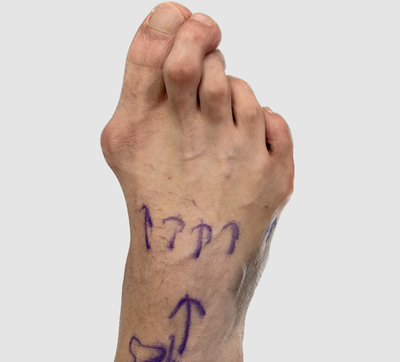
A bunion is a painful bump caused by a structural deformity that affects the first metatarsal bone. It develops on the side of the big toe as it rotates inward towards the second toe, altering the angle of the bones. The condition worsens over time, becoming more noticeable and causing increasing discomfort.
The big toe joint works like a hinge. When the two bones at the joint bend, there is a deviation. It’s similar to the movement of your elbow. The big toe is built to move up and down. Over time, if it isn’t straight in your shoes, or for other reasons, it moves at angles it wasn’t intended to.
A bony bump can appear and enlarge over time, and this lump tends to cause the actual bunion pain.
Bunion Symptoms
Symptoms of bunions include:
- Pain in the big toe joint, as well as a bump
- Redness, warmth, and irritation on the bump
- Foot Pain in the ball of the foot or arch
- Toe pain in the big toe joint or lesser toes
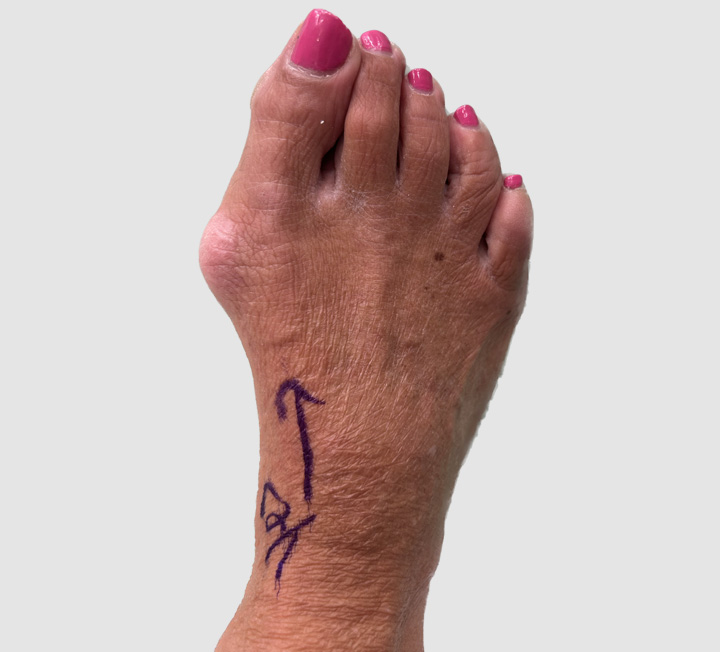
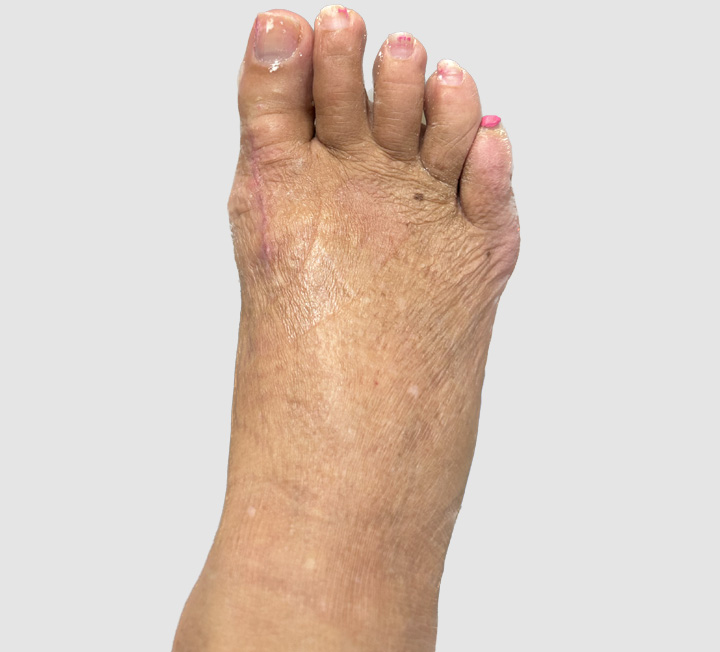
Bunion Causes
Bunions can be caused by:
- Hereditary or genetics — the basic foot type that you inherit.
- Activity with stress and strain through the joint.
- You wear high heels, pointy shoes, or shoes that don’t fit correctly.
Bunion Diagnose
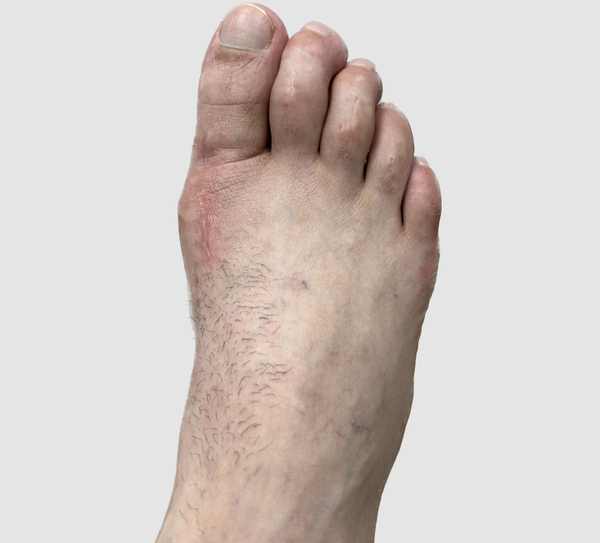
Dr. Jason Gold can typically diagnose bunions with a visual examination. An X-ray may also be used for an in-depth view of your bunion and its causes.
Bunion Treatment Options
Surgical vs. Non-Surgical Bunion Correction
There are two main options a podiatrist may recommend:
The first is conservative (or non-surgical) care, and the second is a surgical correction.
Conservative care will not correct a bunion but may provide bunion relief and reduce foot pain.
Surgical and non-surgical treatments are available at the Foot, Ankle & Leg Vein Center. Surgical treatments typically relieve pain and pressure in more severe cases.
Non-Surgical Options for Bunions
- Changing your footwear to shoes that offer more space for your toes.
- Using padding to protect your foot from rubbing against the inside of your shoe.
- To alleviate symptoms in the short-term, try anti-inflammatory and pain-relief medication.
- Ice can provide temporary pain relief.
- To prevent minor bunions from progressing, shoe inserts may be used to provide additional padding and distribute pressure.
Get bunion treatment at Foot, Ankle & Leg Vein Center today, and protect the health of your feet for the years to come.
Surgical Options for Bunions
In advanced cases of bunions, the pain will not subside, and surgery may be necessary. During surgery, a podiatrist will:
- Remove the inflamed tissue from around the toe joint.
- Remove small sections of bone to straighten the big toe.
- Realign the toes to eliminate pressure and contact between toes.
- To prevent future deformities. In some cases, the joints at the big toe may be joined.
Bunion Surgery Recovery
The minimum time required for bone healing in healthy individuals is six to eight weeks. After this period, patients can usually return to their normal activities and wear their regular shoes within three months at most.
The symptoms of a bunion should not be overlooked, even if the pain and discomfort are still minor. The condition can progress over time, leading to severe pain and complex surgery requirements. If you suspect a bunion or are experiencing pain symptoms like those described above, it’s time to book an appointment with one of our friendly podiatrists.
Your questions answered
Bunion Treatment Frequently Asked Questions
What is a bunion?
A bunion is a deviation of the big toe joint where the great toe otherwise known as the first toe moves inward towards the second. The big toe is built to move up and down. Over time, if it isn’t straight in your shoes, or for other reasons, it moves at angles it wasn’t intended to. That can cause pain in the affected joint. A bony bump can appear and enlarge over time, and it’s this lump that tends to cause the actual bunion pain.
What are the causes of bunions?
A bunion can be caused due to: • Hereditary or genetics • Activity with stress and strain through the joint. • You wear high heels, pointy shoes, or shoes that don’t fit correctly
What are some bunion symptoms?
Symptoms of bunions include: • Pain in the big toe joint, as well as a bump • Redness, warmth and irritation on the bump • Foot Pain in the ball of the foot or arch • Toe pain in the big toe joint or lesser toes
How do you treat bunions at home?
You can mitigate bunions at home by taking the following measures: • Change your shoes: Wear a supportive sneaker or supportive sandals. • Use orthotic shoe inserts: Orthotics go into a shoe and help control the mechanics of the foot and joint alignment. This can slow the progression of the bunion and help to decrease pain. • Oral anti-inflammatories. If you develop an arthritic flare with inflammation including a red hot and swollen big toe joint, cortisone & steroid injections or oral anti-inflammatories can be utilized. • Over-the-counter splints will not correct the position either but may decrease any muscle spasm that one can have.
How long does it take to recover from a bunion surgery?
The minimum time for bone healing in healthy individuals is 6-8 weeks. Patients can usually resume normal activities and wear regular shoes within 3 months.
Will I be able to wear high heels or dress shoes again?
One of the goals of bunion surgery is to re-align the great toe joint better and re-align the bump/bone that gets irritated when wearing high heels. Ultimately, after the bone is healed and the swelling has gone done, you’ll be able to return to wearing high heels. Sometimes, with more arthritic joints, we have to do procedures where we limit the motion of the joint (arthrodesis) or implant an artificial joint, and these procedures would limit the heel height.
Will I be able to participate in sports activities after bunion surgery?
One of the main reasons people have surgery for bunions is to reduce the pain they were experiencing during sports or activities. With the advances in bunion surgery, our patients are returning to sports and their activities faster than ever and are not experiencing pain anymore.
Bunion Surgery: Evidence-Based Treatment, Techniques, and Recovery
Bunion surgery is a surgical procedure designed to correct a bunion deformity at the base of the big toe. A bunion, also known as hallux valgus, develops when the joint at the base of the big toe shifts out of alignment, creating a painful bunion that can interfere with walking, footwear, and daily activities. For many people with bunions, conservative care helps initially, but surgery may be necessary when bunion pain becomes persistent or severe. At Foot, Ankle & Leg Vein Center, bunion correction surgery focuses on restoring alignment, relieving pain, and improving long-term foot and ankle function.
What Is a Bunion and Why It Progresses
A bunion forms when the first metatarsal bone moves outward while the big toe joint angles inward toward the other toes. This deformity in the foot creates pressure at the joint at the base of the big toe and gradually worsens over time.
Common factors that caused the bunion include:
-
Genetic foot structure affecting the foot and ankle
-
Abnormal biomechanics and instability of the first metatarsal
-
Flat feet or excessive pronation
-
Arthritis affecting the MTP joint
-
Wearing shoes that place pressure on the affected foot
Every bunion progresses differently. A mild bunion may cause minimal discomfort, while a severe bunion can lead to significant pain, stiffness, and difficulty placing weight on your foot.
When You May Need Bunion Surgery
Bunion surgery is done when non-surgical care no longer provides pain relief or functional improvement. People with bunions should consider bunion surgery when symptoms affect quality of life or mobility.
Signs you may need bunion surgery include:
-
Ongoing bunion pain despite footwear changes or orthotics
-
A painful bunion that limits daily activities
-
A bunion deformity that is far out of alignment
-
Arthritis affecting the big toe joint or MTP joint
-
Difficulty walking or standing due to foot and ankle pain
A complete physical exam and imaging are performed prior to surgery to determine the type of bunion and the most appropriate type of surgery.
Types of Bunion Surgery Explained
There is no single type of bunion surgery that works for every patient. Bunion surgeries are tailored based on the severity of the deformity, joint condition, and overall foot structure.
Common type of bunion surgery options include:
-
Osteotomy, which involves realigning the metatarsal bone
-
Lapidus procedure, used when instability exists at the first metatarsal joint
-
Arthrodesis, which fuses the joint in cases of advanced arthritis
-
Minimally invasive bunion surgery using small incisions
A foot and ankle surgeon selects the surgical procedure based on whether the bunion is mild, moderate bunion, or severe bunion. The goal is to correct a bunion by addressing the structure that caused the bunion in the first place.
Minimally Invasive Bunion Surgery
Minimally invasive bunion surgery is a modern approach that uses small incisions to realign the metatarsal and correct the bunion deformity. This minimally invasive surgery reduces disruption to surrounding tissue and often results in less scarring.
Benefits may include:
-
Faster recovery times and less scarring
-
Less pain in the first few weeks after surgery
-
Smaller surgical scar
-
Earlier return to weight-bearing when appropriate
Not every bunion is suitable for minimally invasive bunion correction. The type of bunion, joint stability, and severity of deformity determine whether this approach is recommended.
Preoperative Evaluation and Surgical Planning
Before bunion surgery is performed, a detailed evaluation is required. Imaging studies help the surgeon understand how the bones are aligned and whether arthritis is present.
Evaluation includes:
-
Weight-bearing X-rays of the foot and ankle
-
Measurement of the hallux valgus angle
-
Assessment of the first metatarsal and MTP joint
-
Review of prior injuries or medical conditions
This planning ensures the surgical procedure is designed to realign the joint properly and reduce the risk of complications.
What Happens During Bunion Surgery
Bunion surgery is usually done on an outpatient basis, meaning patients go home the same day. Surgery will take approximately one to two hours, depending on the type of surgery performed.
During surgery, the surgeon may:
-
Remove the bony prominence
-
Perform an osteotomy to realign the metatarsal bone
-
Place screws or fixation devices to stabilize the bones
-
Correct soft tissue imbalance around the joint
Once surgery was performed, patients are transferred to the recovery room for monitoring.
Recovery Timeline After Bunion Surgery
Recovery time varies depending on the procedure designed for each patient. Understanding the recovery period helps set realistic expectations.
Typical recovery milestones include:
-
Immediately after surgery, the foot is bandaged with dressings or a brace
-
The first few days after surgery may involve swelling and discomfort
-
Pain medication may be prescribed to reduce pain
-
Avoid putting any weight on the foot if instructed
-
Weight on your foot may be allowed in a surgical shoe
In the first few weeks after surgery, patients should keep your foot elevated and apply ice as recommended. Driving may be restricted, especially if the surgery involved the right foot.
Weeks After Surgery and Rehabilitation
By two weeks after surgery, sutures may be removed, and swelling often begins to decrease. Bones heal gradually over time, and full recovery depends on the severity of correction.
During recovery:
-
Physical therapy may be recommended
-
Strength and range of motion exercises are introduced gradually
-
Most patients experience less pain over time
-
Home during the first phase of recovery is encouraged
Physical therapy supports healing, restores motion, and helps patients return to normal activity safely.
Risks of Bunion Surgery
All surgery carries some risk. Understanding the risks of bunion surgery allows patients to make informed medical decisions.
Potential risks include:
-
Infection or delayed wound healing
-
Scar sensitivity or stiffness
-
Risk of complications related to bone healing
-
Recurrence of the bunion deformity
The overall risk depends on the severity of the deformity, surgical technique, and adherence to postoperative instructions.
Long-Term Outcomes and Pain Relief
Bunion correction surgery is designed to relieve pain, restore alignment, and improve function. Most patients report significant pain relief and improved ability to walk comfortably once healing is complete.
Surgery may reduce pain, improve footwear options, and correct deformity in the foot. With proper planning and care, bunion surgery experience outcomes are highly successful.
Making an Informed Decision
Bunion surgery may be recommended when conservative measures fail and a painful bunion continues to affect daily life. Speaking with a qualified foot and ankle surgeon ensures the correct type of surgery is chosen based on your condition.
Always seek professional medical advice to determine whether you should consider bunion surgery and which approach is right for you.