Spider Vein Treatment by Board Certified Doctors
Spider Vein treatment in Boca Raton and Boynton Beach by our Board-Certified doctors with over 20 years of experience. Dr. Jodi Schoenhaus is ready to help you get clear and beautiful skin.
Dr. Schoenhaus has performed FDA-approved research in her field using dermal fillers, fat grafting, and fat transferring—the study has been published in the National Library of Medicine and Pubmed.


Top-Rated Spider Veins Treatment Near Me
Spider Vein Treatment in Boca Raton and Boynton Beach, FL.
Find treatment for one of the most common forms of vein disease with spider vein removal in Boca Raton and Boynton Beach. Our Board-Certified doctor, with over 20 years of experience, personally performs all treatments. We proudly serve patients across the entire Palm Beach County, FL, providing expert vein care with precision and dedication.
Spider veins develop when capillaries just below the surface of the skin become inflamed and begin to pool blood. The result is a pocket of discolored lines that shows clearly through the skin, with a web-like appearance that has earned the vein disease its name.
Spider veins are often confused with varicose veins, but the two are separate medical conditions that require different forms of treatment.
Check out these incredible numbers.
The Foot, Ankle & Leg Vein Center is specialized in treating all podiatric conditions and focuses on foot and ankle surgery, aesthetic vein procedures, laser therapy, and injectables.
Spider Vein Treatment with Dr. Jodi R. Schoenhaus, DPM, RPhs, FACFAS
Spider Vein Specialist Near Me
Top-Rated Spider Vein Removal Specialist
What are Spider Veins?
Spider veins are the mildest form of venous insufficiency. This condition can affect blood circulation in any of the body’s extremities, but it’s most common in the legs. The condition is also known as venulectasias or telangiectasia and affects about 30 percent of the adult population, mostly women.
What causes spider veins?
There are a number of factors that increase your risk of developing spider veins, including:
- Family history of venous insufficiency
- Pregnancy
- Hormonal changes, such as menopause
- Being over the age of 50
- Obesity
- Standing or sitting for extended periods of time
- Increased sun exposure
- Skin injuries
What is the difference between spider veins and varicose veins?
Spider veins are discolored veins that may appear faint or bold and are generally purple, blue, or red. They are flat on the surface and do not bulge. Varicose veins, on the other hand, are bulging veins that protrude out of the skin surface like a grape under the skin.
Are spider veins painful?
Generally, spider veins are not painful, but on occasion, you may experience the following symptoms:
- Mild discomfort/pain
- Heaviness
- Tingling
- Itching
If these symptoms develop, they will occur in the area surrounding the discolored skin. The symptoms of spider veins often worsen after extended periods of standing or sitting.
Foot, Ankle & Leg Vein Center Reviews
Don't just take our word for it.
See what our patients have to say.
Our patients love treating their foot, ankle and leg vein conditions with us.
Boca Raton and Boynton Beach Spider Vein Removal
While spider veins are a form of venous insufficiency and are often considered an embarrassing condition, they do not require medical treatment. However, many people with spider veins choose to have them removed.
Why should I have a spider veins treatment?
The earlier you treat a cluster of veins that appear, the better. Spider veins will get worse over time, and some can get bigger and become painful. As you age, the veins can become swollen, and the veins can bleed in severe cases.
When these lifestyle changes are not enough, or the condition is severe, vein removal therapies can be used to treat spider veins. These treatment options include laser vein removal or sclerotherapy.
What are conservative treatments for spider veins?
Minimally and non-invasive treatment options are available for treating spider veins in Boca Raton. If you do not want to seek treatment with laser therapy or sclerotherapy, Dr. Jodi Schoenhaus often recommends a number of lifestyle changes that will enhance vein health.
These lifestyle changes may include:
Wearing Flat Shoes
Losing Weight
Exercising Regularly
Wearing support hose or compression stockings
Spider Veins Treatment
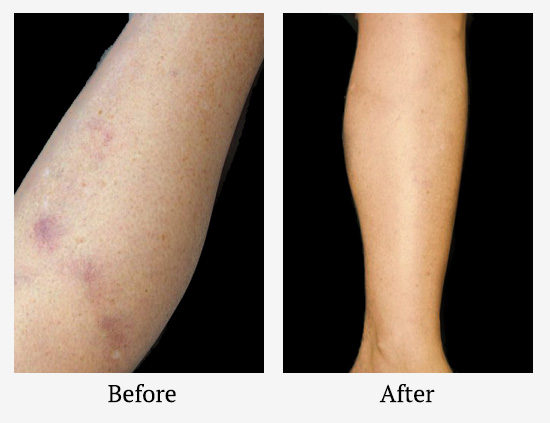
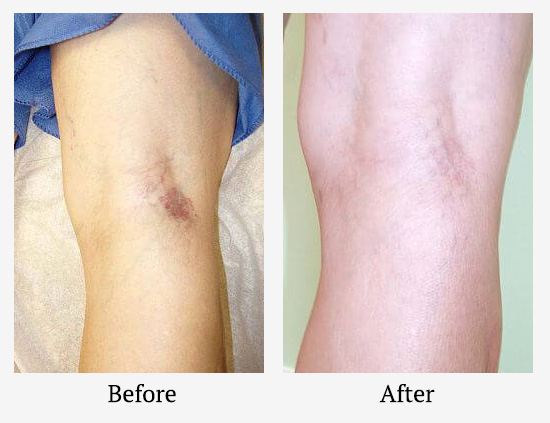
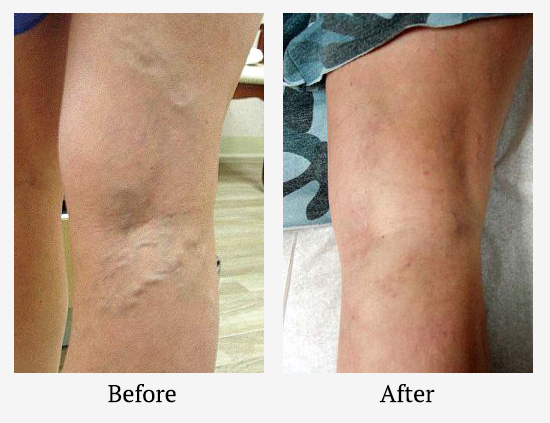
Before & After
Sclerotherapy
Sclerotherapy is the use of an FDA-approved soap-like medicine that is used in the vein to damage the vessel and the body breaks it down.
A tiny needle is used to enter the vein and after the treatment, the veins get lighter and lighter. Most people require three to five treatments for approximately 80% improvement.
After treatment, you can expect bruising for one week and compression therapy is needed for three days. We can measure, fit and dispense compression stockings at the time of service.
Feel free to come in for a consultation. All vein work is performed by Dr. Schoenhaus herself with over 15 years of experience. She is a leg vein sclerotherapy instructor and an expert in the field. If you do not want a small needle, laser vein treatments are another option.
Spider Vein Removal Near Me
Spider Vein Specialist near Boca Raton, FL, and Boynton Beach, FL.
For the treatment of unsightly spider veins, a laser can be used. A fine tip laser with a cold tip is used over the spider vein and heat energy is delivered to the vein to damage the vessel. This will then allow the body to break it down and heal.
Most people require three to five treatments. For your treatment, we can apply a topical anesthetic and use the ice to help ease any discomfort. Again, all treatments are provided by Dr. Schoenhaus herself, not a tech.
Your questions answered
Spider Vein Treatment Frequently Asked Questions
What are the most common Spider Veins Symptoms?
Although most people do not have pain associated with the presence of spider veins, it is common for people to relate itching and tingling over areas of spider veins. If you have tiredness, aching, and heaviness, as well as swelling and pain, there may be a deeper circulation problem that Dr. Schoenhaus can help to diagnose.
What treatments are available for spider veins?
Recommended treatments for spider veins include the use of compression therapy with medical-grade compression stockings or socks. This will help with overall circulation and promote healthy blood flow. If you would like to have spider vein removal treatment, the best option is sclerotherapy. Sclerotherapy uses an FDA-approved medication that gets absorbed by the vein wall, and the body shrinks the vein. This is considered the “gold standard” of treatment and has the best outcomes. Other treatments include laser vein removal.
How is spider vein treatment performed?
Spider vein treatment is performed in the office by Dr. Schoenhaus herself. We do not use a nurse, PA, or assistant to provide the treatments. In a comfortable setting, we clean the areas to be treated, and a tiny needle is used to place the medication into the vein. The key to success is to target the “feeder” vein. Imagine your spider veins are like branches and leaves on a tree. What you don’t see is the tree trunk. The feeder vein is like the tree trunk, and the spider veins are the leaves. If you want to kill the leaves, you simply cannot just cut off the leaves. They would grow back. It is important for you to cut down the entire tree trunk. In spider vein treatments, the best outcomes are when the “feeder” vein is treated first. This is why a skilled specialist should be performing the treatments.
How the recovery process looks like after laser vein treatment?
Recovery from laser vein treatments includes wearing compression stockings (provided by the office). You may have bruising, which is normal and fades. It is recommended to take a natural supplement to minimize bruising (also provided by the office at the time of your consultation).
Is there a required recovery period after spider vein treatment?
After spider vein treatments, there is no downtime. You can resume your normal activity immediately. It is recommended that you wear compression stockings (provided by the office) for three days and wear sunblock on your legs for three months post-treatment.
What is the expected timeframe for noticing results after spider vein treatment?
After the laser vein treatment is performed, you will have bruising to your legs. The veins will look darker and slightly worse before they start to fade and look better. On average, people need 3-5 treatments to achieve an 85% improvement in the appearance of spider veins. After each treatment, you will notice the veins fading. Your best outcomes will be seen 3-6 months after your last treatment. Remember, the veins did not appear overnight. They will not go away overnight. Patience is key here.
How to get rid of spider veins?
Recommended common treatments for spider veins include the use of compression therapy with medical-grade compression stockings or socks. This will help with overall circulation and promote healthy blood flow. If you would like to have spider vein removal, the best option is sclerotherapy. Sclerotherapy uses an FDA-approved medication that gets absorbed by the vein wall, and the body shrinks the vein. This is considered the best treatment with the best outcomes. Other treatments include laser technology or laser vein removal.
How much does laser spider vein treatment session cost in Boca Raton?
Treatments for spider veins range from $150 – $500 a session. Depending on how bad your legs are, most people require 3-5 treatments.
Where can I get a spider vein removal treatment?
We are all about this health and cosmetic concern, especially in summer. The Foot, Ankle & Leg Vein Center is one of the top vein clinics in South Florida. We offer in-house treatments in any of our locations at Boca Raton and Boynton Beach offices. To schedule an appointment, call us at (561)-750-3033, and remove those unwanted veins. Dr. Schoenhaus, a vein specialist with years of experience, is ready to help.
Am I a candidate for spider veins treatment?
Mostly everyone is a candidate for treatment. If you are pregnant or being treated with chemotherapy agents, waiting is recommended. All skin colors and skin types can be treated safely.
Your Spider Vein Specialist
Why choose the Foot, Ankle & Leg Vein Center with Dr. Jodi Schoenhaus as your Spider Vein Specialist
More than 5,000 procedures made in-house.
Dr. Schoenhaus has been practicing vein care since 2004 and has treated thousands of leg veins. The Foot, Ankle & Leg Vein Center offers treatment programs tailored to each individual’s needs:
- Consultations are performed by Dr. Schoenhaus.
- All treatments are performed by Dr. Schoenhaus.
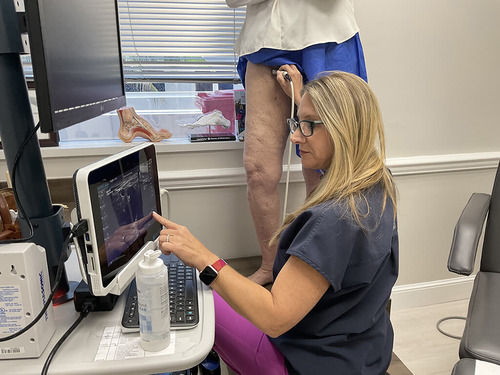
- We use ultrasound guidance and vein finders for best outcomes.
- We use topical numbing on the skin to make the treatments comfortable.
- We dispense compression stockings at our facility -fit and measured for you specifically.-
- We cleanse the legs to ensure no risk of infection.
- We provide free follow-up visits to make sure you are healing well.
- We don’t count injections or syringes for pricing. Dr. Schoenhaus addresses all of the veins visible in each treatment session.
Spider Vein Treatment in Boca Raton and Boynton Beach | Foot, Ankle & Leg Vein Center
Spider vein treatment helps reduce the appearance of spider vein patterns that form near the skin’s surface, most often on the legs. At Foot, Ankle & Leg Vein Center, we provide advanced vein treatment options in Boca Raton and Boynton Beach that focus on both cosmetic improvement and underlying venous health. Our approach evaluates blood flow, vein structure, and risk factors to determine the most appropriate treatment option for each patient.
Spider veins are often cosmetic, but they can also be linked to venous insufficiency, where vein walls weaken and blood does not flow back efficiently toward the heart. That is why accurate evaluation matters before choosing how to treat spider veins.
What Are Spider Veins?
Spider veins (telangiectasia) are small, damaged blood vessels visible at the surface of the skin. They often appear blue or purple, sometimes red, and may look like webs or branching lines. Spider veins usually develop in the legs, where gravity places more pressure on veins in your legs.
Spider veins are different from a varicose vein. While spider veins are flat and thin, varicose veins are larger, may bulge, and can cause leg pain or swelling. Both conditions fall under varicose veins and spider vein disorders, but they require different treatment strategies.
Why Spider Veins Develop
Spider veins form when vein walls weaken and the lining of the vein becomes damaged. This allows blood to pool instead of flowing efficiently, causing veins to enlarge and become visible.
Common factors that cause spider veins include:
-
Family History of Vein Problems: Genetics influence vein strength and valve function increasing likelihood of spider veins developing across generations within families.
-
Pregnancy and Hormonal Changes: Hormonal shifts and increased blood volume during pregnancy weaken vein walls and valves leading to spider vein formation.
-
Aging and Vein Wall Weakening: As aging progresses vein walls lose elasticity causing blood pooling and visible spider veins over time.
-
Standing or Sitting for Long Periods: Prolonged standing or sitting slows circulation increasing venous pressure and promoting spider vein development.
-
Obesity and Increased Vein Pressure: Excess body weight places added pressure on leg veins impairing blood return and encouraging spider vein formation.
-
Sun Exposure Near Skin Surface: Sun exposure damages superficial blood vessels especially on lighter skin making spider veins more visible.
Spider veins may appear on their own or alongside spider or varicose vein conditions. Over time, new spider veins may develop if underlying venous pressure is not addressed.
Spider Veins vs. Varicose Veins
Understanding the difference between spider or varicose veins helps guide proper care.
-
Spider veins are small, web-like vessels close to the skin.
-
Varicose veins are damaged veins that are larger, twisted, and raised.
-
Varicose veins put added pressure on the venous system and may increase the risk of blood clot formation or open sores in severe cases.
Both varicose and spider veins can be unsightly, but varicose veins are more likely to cause pain, swelling, and complications that may require more advanced vascular care.
Spider Vein Treatment Options
Spider vein treatment focuses on closing the affected vein so blood can reroute through healthy veins. The vein then fades and may eventually disappear.
Sclerotherapy
Sclerotherapy is one of the most common treatments for spider veins and small varicose veins. During this minimally invasive treatment, a provider injects a chemical solution directly into the vein.
How sclerotherapy works:
-
A solution is injected into the blood vessel
-
The wall of the vein becomes irritated
-
The vein to collapse and seal shut
-
Blood is redirected, and the vein begins to fade
-
Over time, the vein to disappear naturally
Sclerotherapy is especially effective for spider veins and small leg veins. Multiple treatment sessions may be needed, depending on the number and size of affected veins.
Laser Spider Vein Treatment
Laser treatment uses focused laser light to heat and close damaged veins. Laser therapy is often used for small spider veins or veins too fine for injection.
Laser spider vein treatment may be recommended when:
-
Veins are very close to the skin’s surface
-
The veins are too small for sclerotherapy
-
Patients prefer a needle-free option
In some cases, laser ablation or other vascular procedures are used for larger veins, particularly when underlying venous insufficiency is present.
What to Expect During Treatment
Spider vein treatment is typically performed in-office and is considered minimally invasive.
During treatment:
-
The treated leg is cleaned and prepared
-
An injection or laser is applied to the affected veins
-
No large incisions are made
-
Each session usually takes less than an hour
Most patients return to normal activities the same day. Mild redness, swelling, or a temporary bruise may occur at the treatment site.
Aftercare and Compression Support
After spider vein removal, wearing compression stockings or a compression stocking may be recommended. Compression supports circulation, helps the treated vein close properly, and reduces swelling in the treated leg.
Post-treatment care may include:
-
Wearing compression garments as directed
-
Walking daily to encourage healthy blood flow
-
Avoiding prolonged standing immediately after treatment
-
Avoiding intense heat exposure for a short time
Following aftercare instructions helps reduce the chance that veins may reappear and supports long-term vein health.
Can Spider Veins Come Back?
Spider vein treatment can successfully remove existing veins, but it does not prevent future veins from forming. Veins often develop over time due to genetics and lifestyle factors.
To help prevent new spider veins:
-
Maintain a healthy weight
-
Stay physically active
-
Elevate legs when resting
-
Use compression stockings if recommended
-
Address early signs of venous insufficiency
When to Seek Specialized Vein Care
If spider veins appear with leg pain, swelling, or signs of worsening vein disease, further evaluation may be needed. In some cases, patients may be advised to see a vascular surgeon or vein specialist, especially if larger blood vessels, ulcers, or signs of a blood clot or open sores are present.
Learn More About Vein Treatment Options
Spider vein treatment is not one-size-fits-all. At Foot, Ankle & Leg Vein Center, we evaluate whether sclerotherapy, laser therapy, or another treatment involves addressing deeper vein issues to achieve the best result.
If you are considering spider vein removal in Boca Raton or Boynton Beach, contact our office to learn more about vein treatment options and schedule an evaluation focused on long-term vascular health and appearance.